

Weekend pool problems always strike at the worst possible moment. A pump fails, the water clouds over, or the cleaner gets stuck. Most pool owners and facility managers are familiar with these frustrations, and calling a technician on a Saturday or Sunday often comes with a hefty price tag.
However, a new generation of affordable pool automation tools is changing this. Simple devices such as smart timers, water-level sensors, or basic remote monitors can help identify issues early, preventing them from escalating into weekend emergencies. This guide explores practical, cost-effective automation solutions suitable for South African environments, yet applicable globally as well.
Why Weekend Pool Problems Keep Happening
Many weekend pool emergencies are not sudden but develop gradually over days or weeks. Common culprits include:
- Incorrect timer settings: Pumps running for too long or too short.
- Chemical imbalances: Drifting levels, especially in hot weather.
- Water loss: Slow leaks or evaporation leading to levels dropping below the filter line.
- Unnoticed equipment wear: Components deteriorating without detection.
These problems often don’t become apparent until on Friday evenings, right when pool services are unavailable. Basic and affordable pool automation tools can prevent these situations by continuously monitoring and alerting you for early warning signs.
Understanding Pool Automation
Pool automation, though it sounds technical, simply involves using small smart devices to automatically control or monitor your pool. These tools do not have to be neither expensive nor complicated. They act as helpful assistants, managing repetitive or easily forgotten tasks like switching pumps on and off, checking water chemistry, or sending alerts when issues arise.
Modern pool automation can include:
- Smart timers that optimize pump and light operation times.
- Wi-Fi-connected sensors that monitor water temperature, pH, and chlorine levels.
- Pump alert systems that notify you of abnormal power draw from the motor.
- Water-level detectors that warn of water loss.
These systems can collectively work together to minimize the risk of costly weekend breakdowns.
The South African Reality
Most, if not all South African pool owners encounter specific challenges, such as load-shedding interrupting pumps and unstable internet near pool areas. They also need affordable solutions that avoid extensive rewiring or expensive smart home systems.
Fortunately, many affordable IoT (Internet of Things) devices are now well-suited for these conditions. Some can operate on rechargeable batteries or solar power, and most can send alerts via standard Wi-Fi or mobile data networks.
For those interested in broader pool automation in South Africa, companies like Fluidra South Africa provide information on how connected pool systems enable users to remotely monitor water chemistry and equipment health.
Low-Cost Automation Solutions That Actually Work
Here are some realistic, DIY automation ideas to prevent common issues without draining your wallet.
1. Upgrade to Smart Timers and Wi-Fi Controllers
Swap out old mechanical timers for smart ones. Wi-Fi enabled timers, like those from Intermatic or TP-Link’s Kasa, let you control pumps and heaters from your phone. This is incredibly handy for managing your system during load-shedding or unexpected downpours, even when you're not home. They offer significant energy savings at a fraction of the cost of full automation panels.
2. Install Pump Alert Devices
An essential early warning system is a smart power monitor connected to your pool pump. It tracks electricity usage, and a sudden spike or drop can signal a blockage, dry run, or pump failure. Systems like Intuz’s IoT Pump Monitoring demonstrate how these alerts reduce maintenance costs and prevent major damage.
3. Implement Water-Level Sensors
Low water levels can quickly burn out pumps. A simple float switch or water-level sensor can detect drops before they become critical. Some sensors can even connect to small refill pumps or solenoid valves for automatic top-ups, while others send notifications to your phone. This inexpensive solution can save thousands in repair costs.
4. Basic Chemical Monitoring
Chemical imbalances are a leading cause of green or cloudy water after a weekend. Smart floating sensors, such as the Blueriiot Smart Water Analyzer or local alternatives from Pool Spa & Filtration Supplies, automatically test pH, chlorine, and temperature. Results are sent to your phone, allowing you to add chemicals proactively.
5. Explore Entry-Level IoT Controllers
For those ready to take automation further, a small IoT controller like the EQSP32 from Erqos can manage multiple aspects of your pool. It connects to sensors, pumps, and lights, following programmed rules; for example, running the pump for four hours if the water temperature exceeds 28 °C. These systems are compact, energy-efficient, and easily expandable.
6. Utilize Remote Dashboards and Alerts
Cloud platforms such as The Attendant or PoolCop enable you to monitor pool data from anywhere. Other systems, like Energy Sense South Africa, optimize local energy use while providing remote pump control. The core benefit is simple: you’ll receive immediate alerts if anything changes, preventing weekend chaos before it starts.
How to Set Up a Simple Pool Automation System
Embracing smart automation for your pool doesn't typically demand specialized tools or professional assistance. Here's a practical approach to get you started:
- Evaluate Your Current Pool System: Begin by identifying which components of your pool cause the most trouble. Is it an unreliable pump timer, or perhaps consistent water loss? Pinpointing these pain points will guide your automation efforts.
- Prioritize One Automation Project: Start small and focus on a single issue. Introducing a simple timer or a float switch can be an excellent first step into pool automation.
- Test Alerts and Monitoring: Once a system is in place, test its notification capabilities using your phone or tablet. Adjust settings to ensure you receive clear alerts without being overwhelmed by false alarms.
- Expand Your Automated Systems Gradually: As you build confidence in one automated system, progressively add more. Consider integrating chemical monitoring or pump power tracking for a more comprehensive setup.
- Retain Manual Control Options: While automation offers significant benefits, never fully abandon manual controls. Traditional switches and test kits remain crucial for backup during power outages or Wi-Fi interruptions.
- Perform Regular Device Maintenance: To ensure your automation tools continue to protect your pool effectively, remember to maintain them. Regularly clean sensors and monitor battery levels or solar charge status.
Overcoming Common Challenges
Ways you can overcome common challenges in pool automation:
1. Power Cuts (Load-shedding):
- Solution: A small UPS (uninterruptible power supply) can keep your sensors and Wi-Fi running for a few hours. For some devices, like chemical sensors or controllers, rechargeable batteries or solar panels are also viable options.
2. Poor Wi-Fi Near the Pool:
- Solution: A Wi-Fi extender or a SIM-based IoT gateway can help maintain stable communication, even in outdoor areas.
3. Older Pool Systems:
- Solution: Many automation devices are compatible with older pumps. You can use plug-and-play smart plugs or external relays, eliminating the need to replace your entire pump or control box.
4. False Alerts:
- Solution: Expect some false notifications during the initial week. Gradually fine-tune the thresholds until the alerts accurately reflect real problems.
5. Sensor Maintenance:
Solution: Chlorine and pH sensors require gentle cleaning and calibration every few months. This is a straightforward process, often detailed in product manuals or on YouTube tutorials.
Real-World Cost and Value
Affordable automation doesn't equate to low quality. Here are some examples of cost-effective solutions:
- Smart plug or timer: R300 – R800
- Float switch or water-level sensor: R200 – R600
- Pump power monitor or IoT module: R500 – R1 200
- Wireless chemical sensor: R2 000 – R6 000
- UPS for Wi-Fi or controller: R1 000 – R1 800
These prices are minimal when compared to weekend technician callouts, which can easily exceed R1 500 per visit. Furthermore, these systems contribute to reduced energy consumption and prolonged equipment lifespan. According to Quick Pools South Africa, implementing smart pool setups can cut operating costs by up to 30% through optimized pump scheduling and proactive maintenance.
Practical Benefits Beyond Emergencies

Automation offers more than just disaster prevention; it provides convenience and long-term advantages.
Here's how automation benefits you:
- Reduced electricity bills: Smart timers optimize pump operation, preventing unnecessary energy consumption.
- Consistent water quality: Sensors actively monitor and regulate chemical levels, eliminating sudden spikes and dips.
- Extended equipment lifespan: Automation minimizes dry runs and overheating, preserving your equipment.
- Remote control and peace of mind: Ideal for landlords, guest houses, and property managers, offering control from anywhere.
Ultimately, automation grants you more free time on weekends or holidays, freeing you from constant worry about potential issues.
Honest Reflections and Small Lessons
Pool ownership often feels like managing a fickle entity, with even the most robust systems occasionally faltering. While automation can't replace common sense, it significantly aids in early problem detection. Understandably, concerns arise about notification overload or Wi-Fi dependency. The solution lies in striking a balance: automate predictable tasks, but remain engaged to address the unexpected.
There's an initial learning curve; the first setup might consume a weekend. However, once established, it quickly integrates into daily routines, becoming as intuitive as checking weather updates on your phone.
A Few Reliable Resources
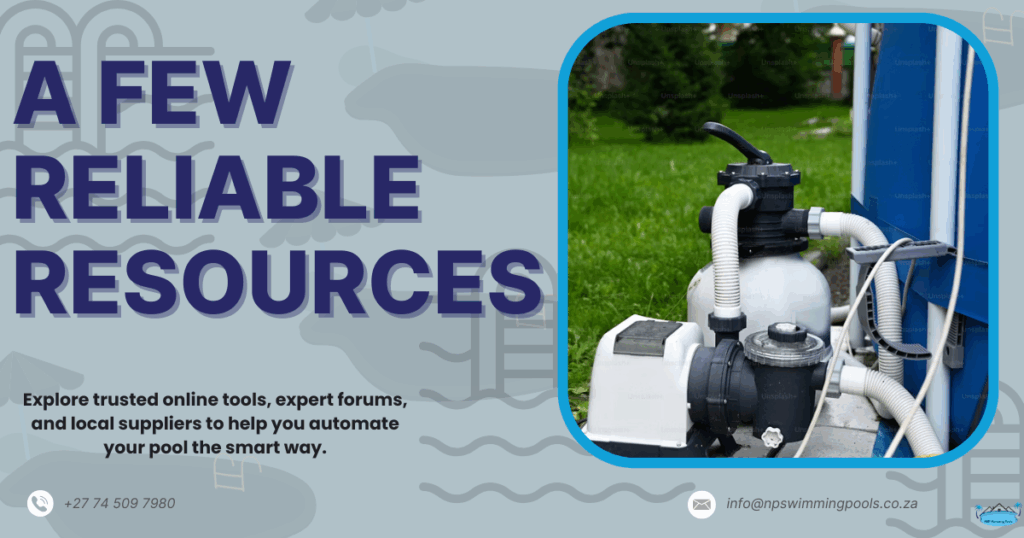
For readers exploring further:
- Fluidra South Africa – Internet of Pools: An overview of connected pool management solutions.
- Energy Sense South Africa: Practical IoT (Internet of Things) control units for pool pumps.
- Pool Spa & Filtration Supplies: Smart pool monitoring products and advice.
- Intuz Blog on IoT Pump Monitoring: Insights into how IoT reduces pump downtime.
- Quick Pools South Africa: The cost breakdown and benefits of smart pool technology.
All of these resources provide current, reliable, and regionally relevant information for anyone exploring pool automation in South Africa or beyond.
Final Thoughts
Automation is no longer a luxury, but a critical preventative measure. Implementing even simple tools, such as a float sensor or a small Wi-Fi controller, significantly reduces the likelihood of weekend emergencies and stress.
The most effective strategy is a gradual, step-by-step approach. Begin by addressing your most pressing issue with a single device. As your budget allows and your confidence grows, you can progressively add more automation. This incremental process will eventually lead to a self-sufficient pool, freeing you to enjoy your weekends without the worry of emergency calls or last-minute panics.
Ultimately, automation doesn't replace your involvement; it simply ensures your pool maintains optimal conditions even when you're not directly supervising it.
