

Introduction
Every pool loses water. It might be from splashing, evaporation, or cleaning the filter. That lost water needs to be replaced, but the type of top-up water you use changes more than the water level; it changes the chemistry of your pool. Understanding these changes is the difference between a sparkling blue pool and a cloudy, stained, or unsafe one.
Why Top-Up Water Affects Pool Chemistry
At first glance, water looks the same. But each source: municipal tap water, borehole, tanker, or rainwater— comes with its own “baggage.” Some carry minerals like calcium and iron, others may contain chlorine by-products or even microbes. When these substances enter your pool, they change pH, hardness, chlorine demand, and overall balance.
Simple takeaway: The clearer the water looks, it doesn’t always mean it’s safe for your pool. Testing and treating are always necessary.
Municipal (Tap) Water
What it is: The most common source for topping up pools in South Africa. It’s treated for drinking and generally consistent. (PHTA Recreational Water Quality Committee)
How it changes chemistry:
- It may increase chlorine demand because it often contains compounds that react with chlorine.
- May carry phosphates, which feed algae growth if not managed.
- In some regions, calcium levels are high, leading to scaling on pool walls and equipment.
Solution:
- Test chlorine levels after topping up. If chlorine seems weak, apply a quick shock treatment.
- Use phosphate removers if algae becomes a recurring issue.
- Keep an eye on pH and calcium hardness to prevent buildup.
Borehole Water
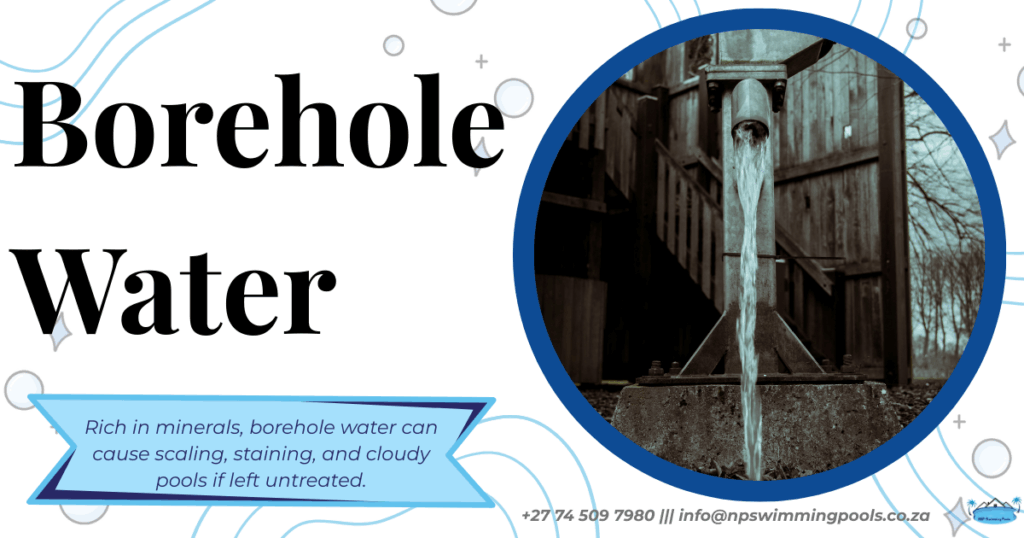
What it is: Groundwater pumped from a borehole, widely used in Johannesburg, Tshwane, and other water-scarce areas.
How it changes chemistry:
- Usually high in minerals (hard water), which makes pools cloudy and forms scale.
- Often contains iron and manganese, which oxidize in chlorine and cause brown or green stains.
- It may contain bacteria or nitrates, making the pool unsafe.
Solution:
- Always test borehole water before use.
- Use filters or metal-removing chemicals before topping up.
- If hardness is high, add a scale-control chemical.
- For bacteria, shock the pool after adding.
Honest reflection: Borehole water feels “free,” but untreated, it often costs more in repairs and chemicals. (Architect Cape Town – Borehole Iron Removal) (MDPI Study – Borehole Contamination)
Tanker Water
What it is: Bulk-delivered water, common during water cuts or restrictions. The source depends on the supplier.
How it changes chemistry:
- If municipal, it may contain chlorine by-products or phosphates.
- If it comes from a borehole, it may contain high metals or hardness.
- Quality is uncertain unless tested.
Solution:
- Always ask where tanker water comes from.
- Test a sample before adding to the pool.
- Treat according to whether it behaves like municipal or borehole water.
Practical thought: Topping up blindly with tanker water can undo weeks of careful balancing.
Rainwater
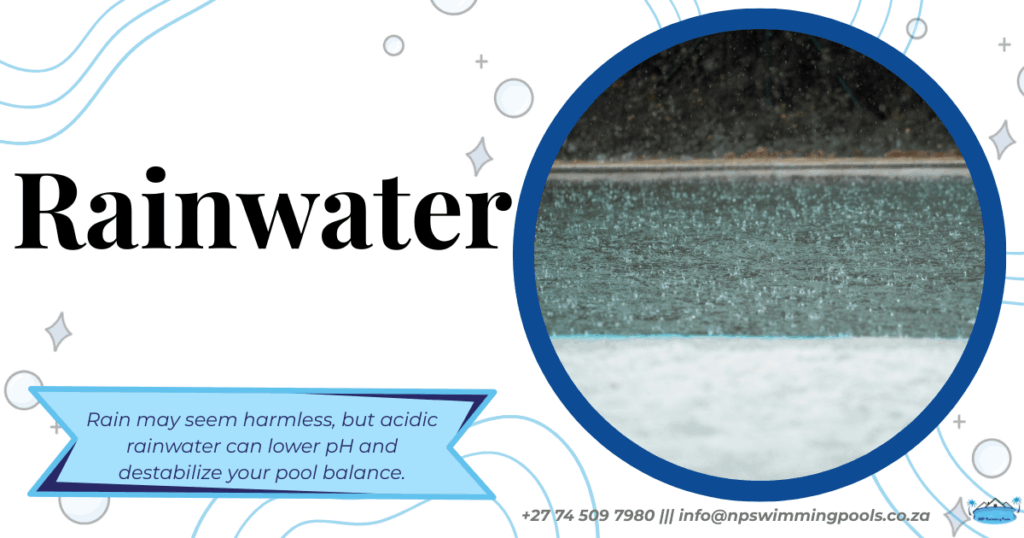
What it is: Collected from rainfall, usually stored in tanks. Popular as a free and eco-friendly option. (RainHarvest – Rainwater Pool Use)
How it changes chemistry:
- Naturally soft and low in minerals, which can lower the hardness too much.
- Often acidic, lowering pool pH and making water corrosive.
- If collected from roofs, it may carry dust, dirt, or pollutants.
Solution:
- Use first-flush systems to filter roof runoff.
- Treat stored rainwater with chlorine or UV before use.
- Test pH and alkalinity after adding, and adjust if they drop too low.
The Balancing Checkpoints
No matter the source, pool water should stay within three safe ranges:
- pH: 7.2 – 7.8
- Alkalinity: 80 – 120 ppm
- Calcium Hardness: 200 – 400 ppm
These ranges keep chlorine effective, prevent irritation, and protect surfaces from damage. Testing after every top-up is the only reliable way to stay in balance. (Swimming Pool Sanitation Guidelines)
Common Mistakes to Avoid

- Assuming clear water means balanced water.
- Adding borehole or tanker water without testing.
- Forgetting to adjust pH after rainwater top-ups.
- Ignoring slow calcium buildup from municipal supplies.
Honest admission: Many pool owners learn these lessons the hard way, only after stains or cloudy water appear.
Conclusion
Top-up water may seem like a small detail, but it is one of the biggest factors that change pool chemistry. Municipal water increases chlorine demand, borehole water risks staining and cloudiness, tanker water brings uncertainty, and rainwater lowers pH. Each has its pros and cons, but all require testing and adjustment.
The best solution is simple: test, treat, then swim. By knowing what’s in your top-up water, you protect your pool, your equipment, and everyone who uses it.
